
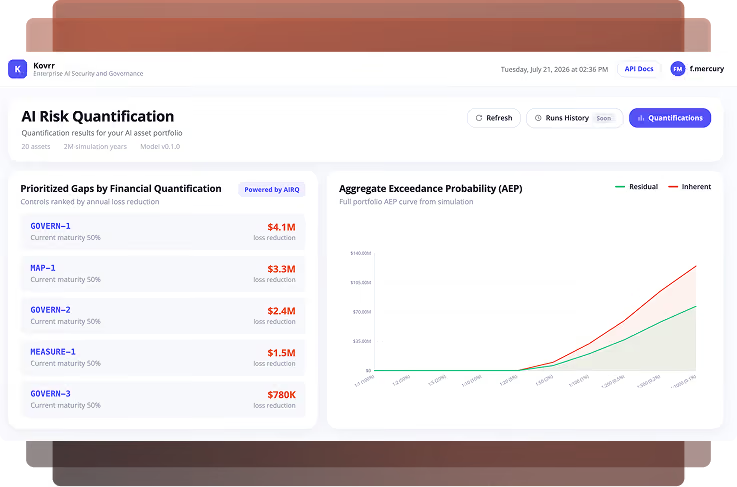
Uncover Every AI Tool and Agent in Use Across Your Organization

Kovrr’s AI Asset Visibility platform discovers and maps every AI tool and application, sanctioned or shadow, across the organization. The result is a comprehensive inventory that gives security and GRC leaders immediate insight into where GenAI systems and autonomous AI agents operate, what data they access, how they are used, and the financial risk exposure they introduce.
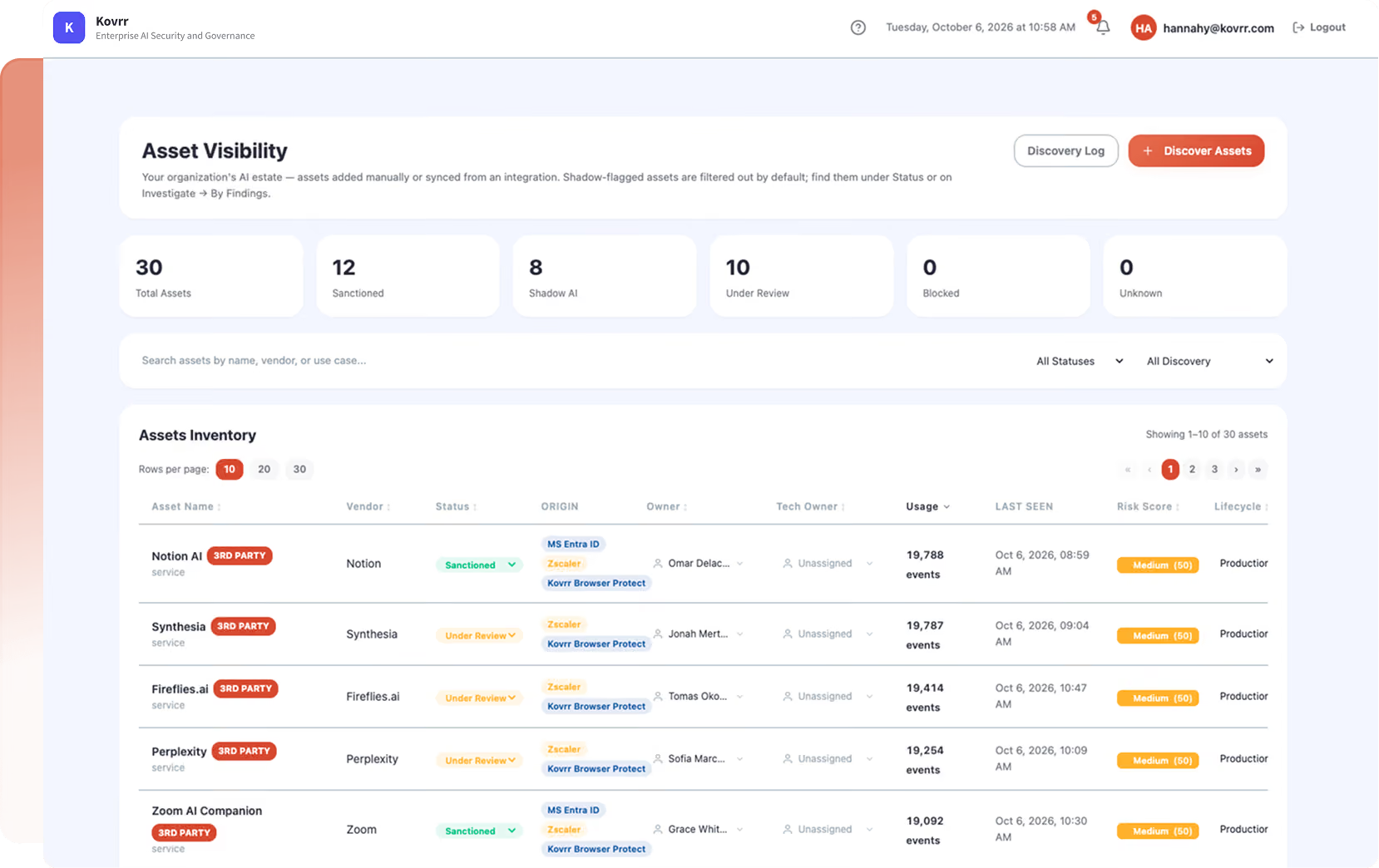
Dashboard interface of Kovrr's Asset Visibility showing total assets, sanctioned, shadow AI, under review, blocked, and unknown assets. Below is a searchable assets inventory table listing asset names like Notion AI, Synthesia, Fireflies.ai, with statuses such as Sanctioned or Under Review, origins, owners, tech owners, usage events, last seen dates, risk scores, and lifecycle stages. Top bar includes user profile, notifications, date and time, and logout option.
What Kovrr’s AI Asset Visibility Platform Enables
Designed for accuracy, scalability, and governance alignment, Kovrr’s AI Asset Visibility platform gives enterprises the foundation to manage both AI and agentic AI responsibly and at scale.
Complete AI Discovery

Identify every sanctioned, shadow, and embedded AI tool across the organization, including integrations within existing platforms or workflows, creating the first unified inventory of AI activity across the enterprise.

Automated Data Collection

Eliminate manual reporting with API integrations and secure data imports that automatically collect AI and agentic AI usage data from departments and vendors, validating each record before it’s added to the inventory.

Unified Source of Truth

Replace fragmented spreadsheets with a single, dynamic dashboard that maps AI tools, autonomous agents, users, and data interactions in one verified view, complete with usage trends, filters, and searchable insights.

Audit-Ready Reporting

Generate exportable summaries and reports that satisfy board, compliance, and insurance inquiries with factual, up-to-date visibility data that includes record-level details and change tracking.

Foundation for Governance

Serve as the visibility layer powering Kovrr’s AI Governance and Security Platform, creating a continuous data flow from discovery to financial exposure through integration with other modules.

Quantification Enablement

Validate AI asset data to support exposure modeling and financial impact analysis, enabling accurate AI Risk Quantification (AIRQ) and defensible decision-making across the enterprise.

Core Capabilities That Power
Kovrr’s AI Visibility Tool
CRUD
Operations

Create, update, and remove GenAI asset records to keep the inventory accurate and current.

CSV
Import

Bulk upload AI asset data via validated CSV imports for faster onboarding and standardization.

Asset Details
Page

View each asset’s description, department, data sources, users, and related risk attributes.

Risk Profile Integration

See each asset’s exposure signals and financial impact through direct risk model integration.

User Relationship Management

Map all users and business units to their respective GenAI tools for clear accountability.

Usage
Trends

Track the AI system and GenAI adoption and activity over time across teams and departments.

Filtering and Sorting

Seamlessly filter assets by category, vendor, or department, and sort by usage or risk.

Exports and Reporting

Export inventories or filtered views for audits, board reviews, and compliance reporting.

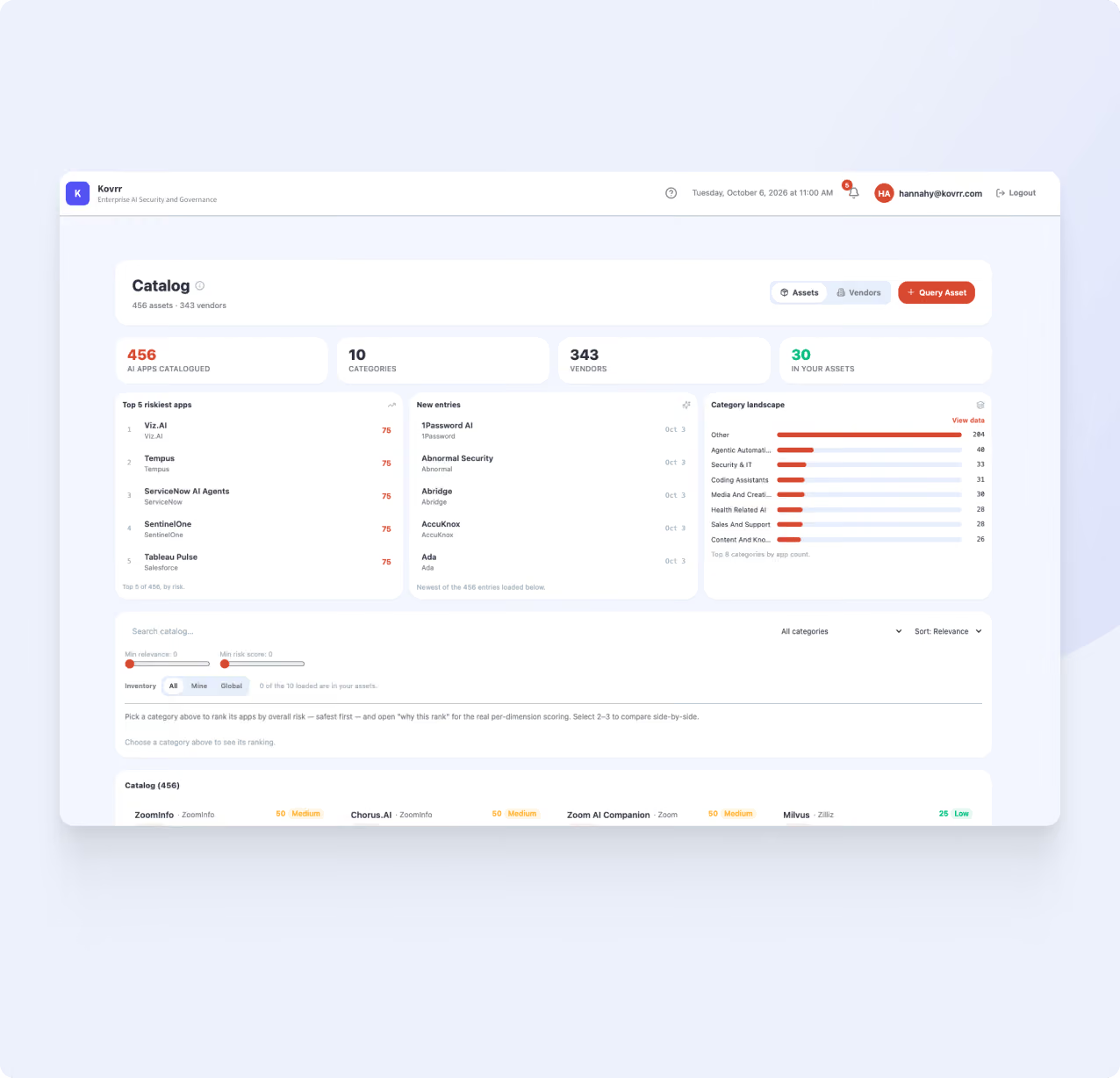
Dashboard interface showing a Catalog with 456 AI apps catalogued, 10 categories, 343 vendors, and 30 assets. Sections include Top 5 riskiest apps with scores, new entries list, and a Category landscape bar chart with various categories and risk levels. Options to filter by Assets or Vendors and a Query Asset button are visible. Search and filter options for inventory and categories are also present, along with a row listing apps with corresponding risk scores.

The Current Reality of Opaque AI Governance

Security and compliance teams are still piecing together fragmented AI usage data. Even sanctioned tools provide limited insight into who’s using them, how, and with what data. Common challenges include:

  • Manual workflows: Risk exemptions, approvals, and tool tracking are handled through docs and shared folders.

  • Limited visibility: Admin consoles and CASB tools capture partial data, leaving major blind spots.

  • Shadow AI adoption: Employees use tools like Claude and autonomous AI agents with no oversight.

  • No unified view: Data sits in silos, with no way to connect users, tools, and data sources.

Without a central, continuously updated inventory, AI governance and security remains reactive, preventing organizations from accurately modeling financial, compliance, and operational exposure.

Instantly Assess Third-Party AI Risk for Free

Third-party AI systems often introduce risk long before they appear in internal inventories. Kovrr’s AI Vendor Risk Catalog provides continuously updated intelligence on AI vendors, including vendor risk signals, regulatory exposure, incident history, and model-level considerations.

Discover and Map Every AI Tool and Autonomous Agent

Kovrr’s AI Asset Visibility platform discovers and updates every AI system and autonomous agent continuously, giving GRC teams a foundation for oversight and governance.

  • Automated detection: Connects with identity systems and integrations to locate sanctioned, shadow, and embedded AI tools.

  • Flexible data collection: Combines integrations, surveys, and CSV uploads to consolidate usage data quickly and accurately.

  • Comprehensive coverage: Captures all AI and agentic AI activity, including tools with third-party monitoring features, for complete visibility.

  • Unified visibility: Produces a dynamic inventory that replaces manual tracking and fragmented reporting.

With Kovrr, organizations move from manual guesswork to a living system of record that reflects how AI operates and the financial risk exposure it generates across their environment.
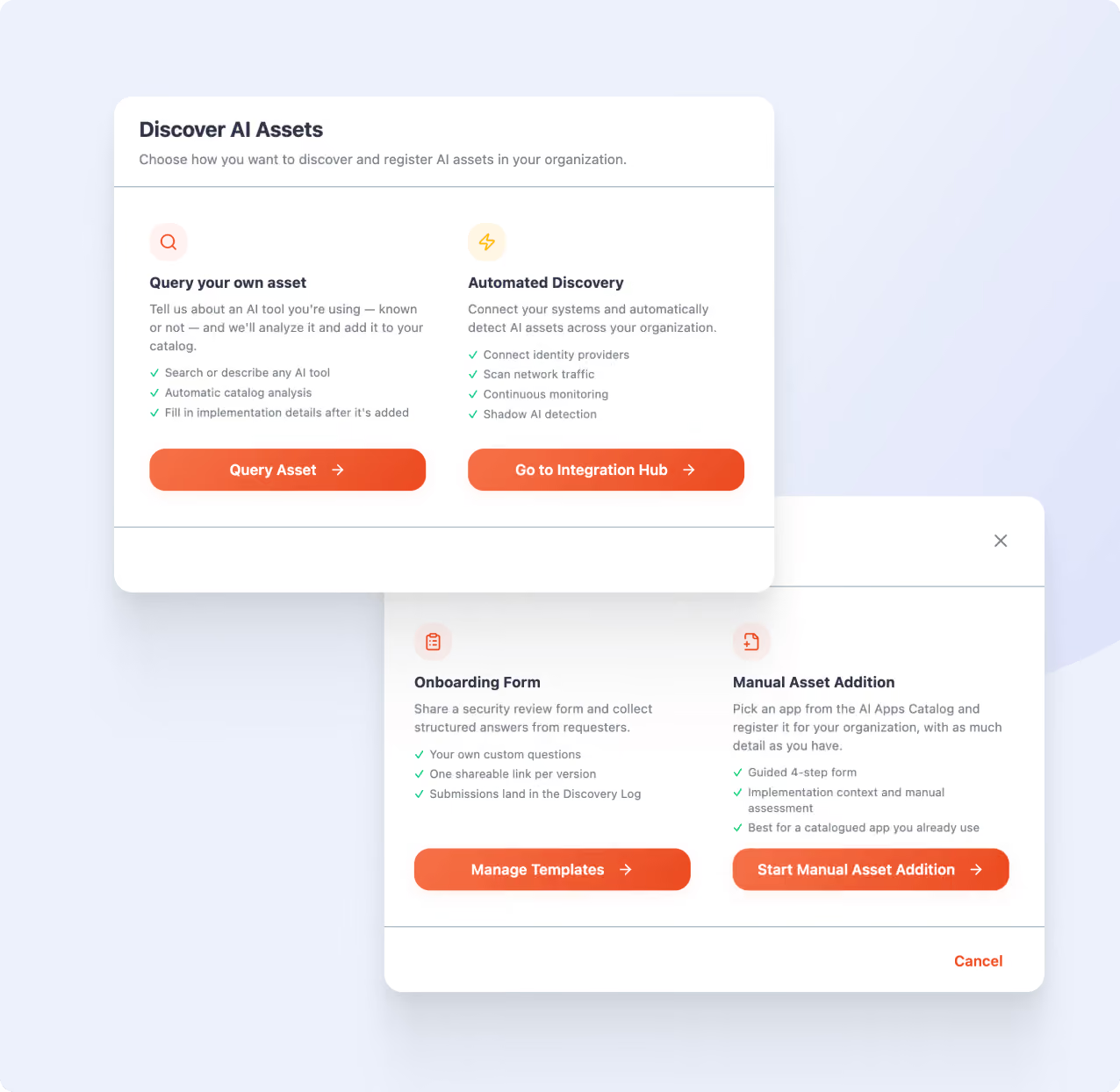
User interface displaying two panels titled 'Discover AI Assets' and asset registration options. The first panel offers 'Query your own asset' with features like searching AI tools, automatic catalog analysis, and an orange 'Query Asset' button, and 'Automated Discovery' identifying AI assets with check marks for identity providers, network scanning, monitoring, and shadow AI detection with a 'Go to Integration Hub' button. The second panel shows 'Onboarding Form' for security review with custom questions, shareable links, and submission logs plus a 'Manage Templates' button, and 'Manual Asset Addition' to add apps from the AI Catalog with a guided form and assessment, plus a 'Start Manual Asset Addition' button, with a 'Cancel' option at bottom right.
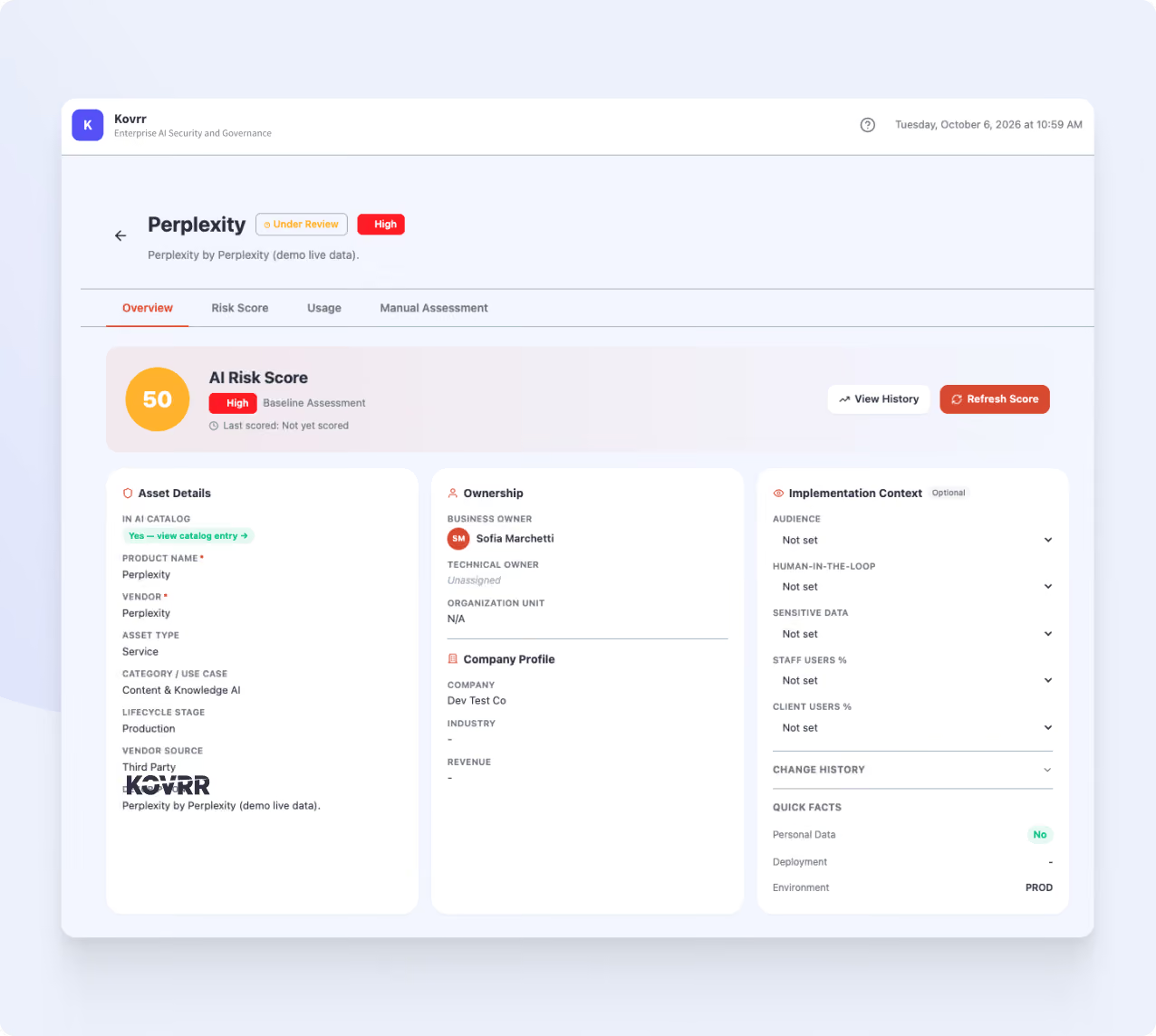
User interface screenshot of Kovrr's AI risk assessment platform showing the 'Perplexity' product with a high AI risk score of 50 under baseline assessment, marked as under review. The screen has sections for asset details listing the product name, vendor, asset type, category, lifecycle stage, and vendor source; ownership with business owner Sofia Marchetti and unassigned technical owner; company profile for Dev Test Co; and implementation context with audience, human-in-the-loop, sensitive data, staff users %, client users %, change history, and quick facts including personal data marked No, deployment, and environment PROD.

Classify and Contextualize AI Usage

Once identified, Kovrr automatically organizes assets into a view showing how AI and autonomous agents operate, what data they touch, and which safeguards apply.

  • Group AI tools and agents according to their purpose, data sensitivity, and business function.

  • Link each asset to users and departments for accountability and ownership.

  • Flag AI and agentic AI activity or data flows that require additional review or added controls.

  • Generate executive-ready summaries to support governance and compliance.

This context turns a raw inventory into a dynamic operational map that informs policy, backs audits, strengthens accountability, and ultimately reduces exposure.

Route AI Assets Through Review and Approval

Discovery produces an inventory. Kovrr then routes each discovered AI tool and agent through review, where administrators can approve or block.

  • Review status: Every discovered asset carries a state of sanctioned, shadow, pending review, or blocked.

  • Recorded sign-off: Each decision is stored with the approver, timestamp, and rationale, producing an attestation record available for audit.

  • Assigned ownership: Business and technical owners are named on every asset, establishing accountability for the decision and continued oversight.

Approval history is recorded, giving auditors documentation of which AI systems were permitted, by whom, and on what basis.
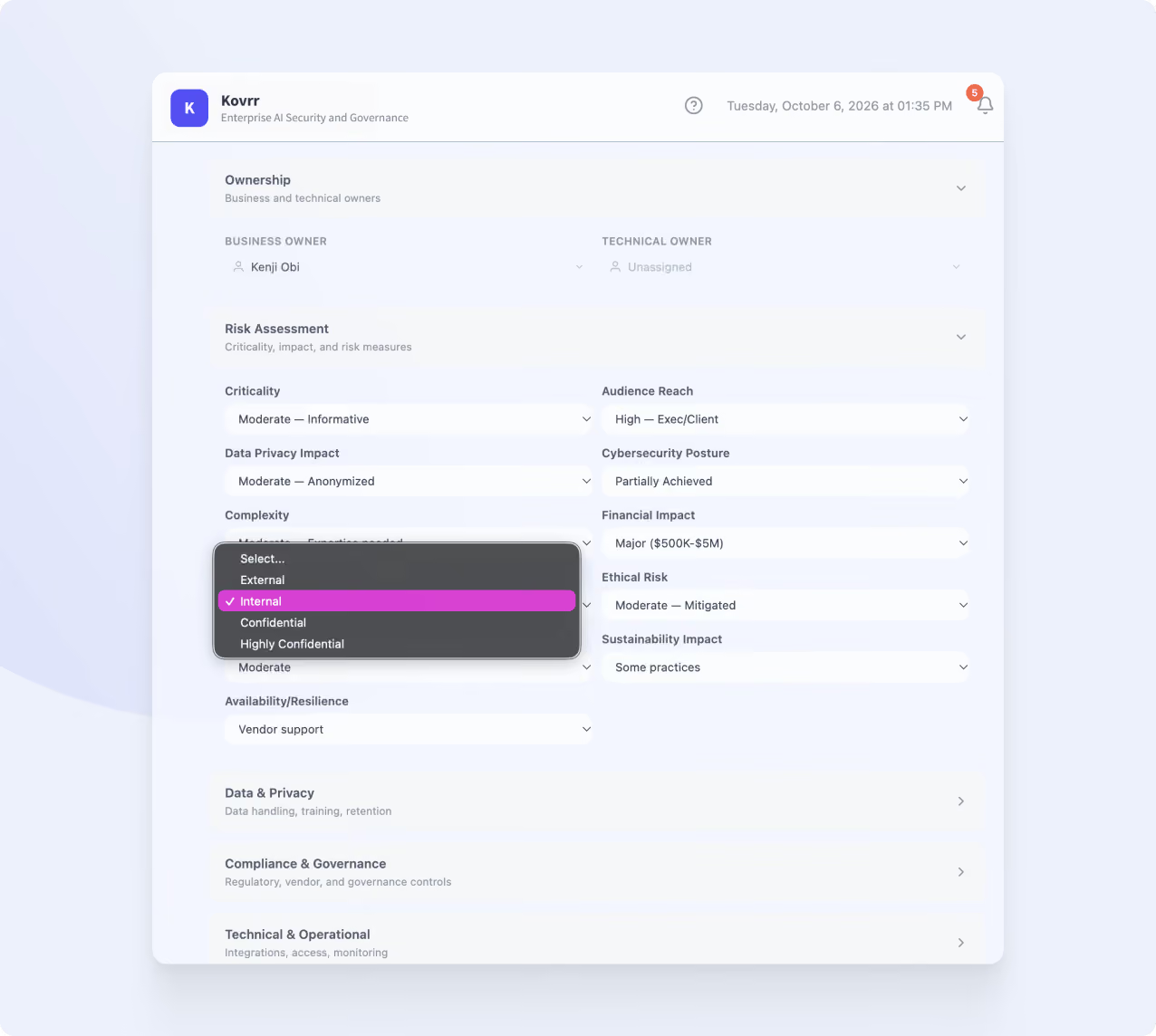
Screenshot of a digital form interface from Kovrr titled 'Enterprise AI Security and Governance' showing ownership details, risk assessment categories with dropdown menus, including business owner, technical owner, criticality, data privacy impact, complexity, availability/resilience, audience reach, cybersecurity posture, financial impact, ethical risk, and sustainability impact. A dropdown menu for 'Complexity' is open with options Select, External, Internal (selected), Confidential, Highly Confidential, and Moderate.
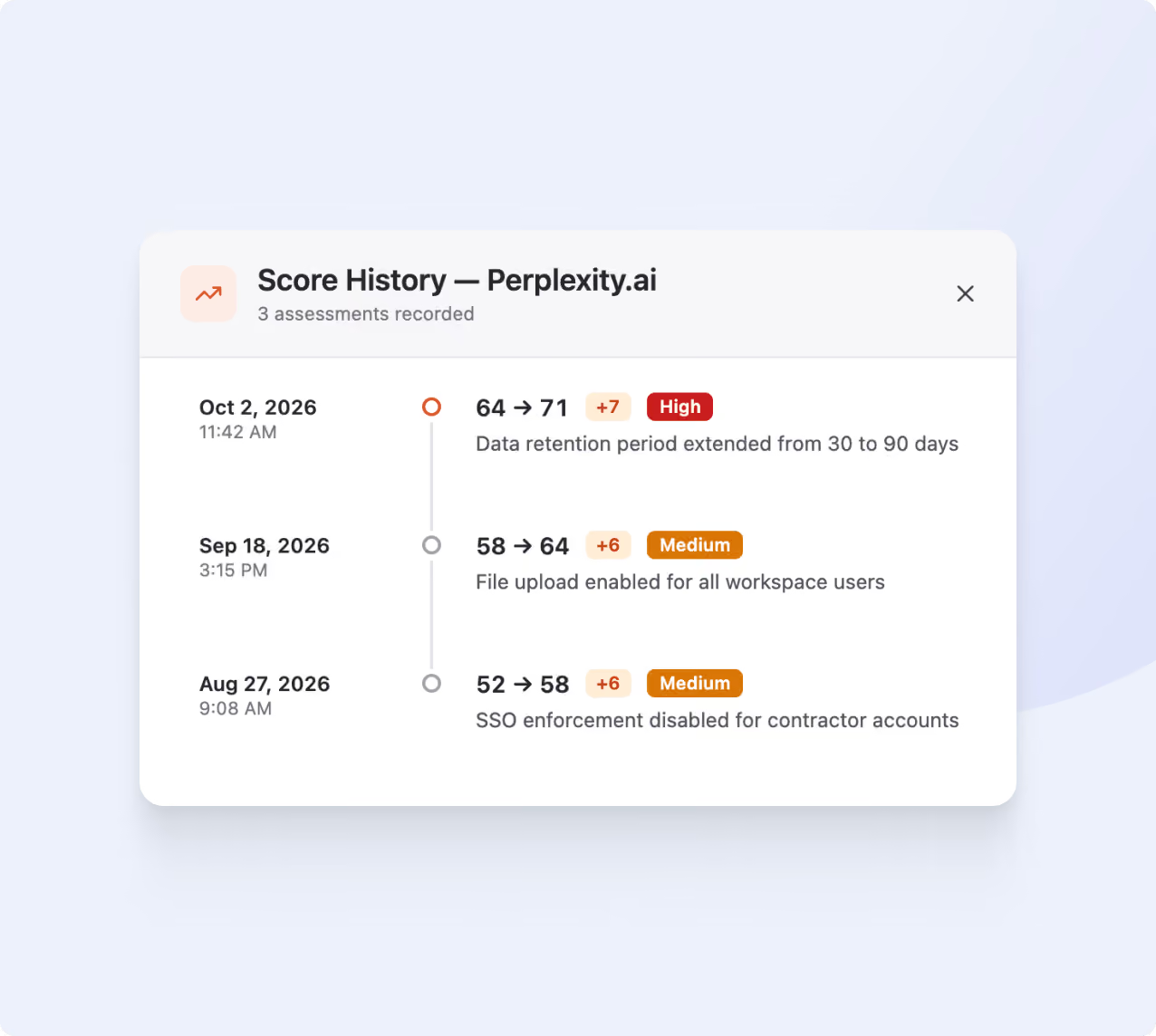
Score History from Perplexity.ai showing 3 assessments recorded: On Oct 2, 2026 at 11:42 AM, score increased from 64 to 71 with a high change of +7 due to data retention period extension from 30 to 90 days; on Sep 18, 2026 at 3:15 PM, score rose from 58 to 64 with a medium +6 change after enabling file upload for all workspace users; and on Aug 27, 2026 at 9:08 AM, score moved from 52 to 58 with a medium +6 change when SSO enforcement was disabled for contractor accounts.

Score AI Risk Continuously and Diagnose What Drives It

Approval sets a starting position. Kovrr then scores every AI asset continuously, updating as new telemetry arrives from connected sources.

  • Automatic recalculation: Scores update as signals arrive from connected sources, without manual reassessment.

  • Score attribution: Each score breaks down into weighted components covering the full spectrum of risk.

  • Score history: Every asset retains a full scoring history, showing how exposure has changed since it entered production.

  • Alerting on movement: Severity increases, newly discovered assets, and control failures generate alerts routed to the owners accountable for the asse

Scoring reflects how AI systems operate in production, giving owners a current view rather than a point-in-time assessment.

Why AI Visibility Software Matters

Kovrr’s AI Asset Visibility software provides a single source of truth for how AI and agentic AI operates across the enterprise. It gives security and GRC teams continuous awareness of where AI systems exist, who uses them, and what data they access. With this foundation, leaders can maintain accountability, demonstrate compliance, and make governance decisions grounded in measurable exposure and defensible financial insight.

Abstract digital cityscape made of vertical lines and dots in blue and orange tones on a dark blue background.

Quantify the Business Impact of AI Risk

Kovrr’s AI Risk Quantification (AIRQ) module builds on your visibility foundation by modeling realistic AI-related loss scenarios. It translates discovered assets into measurable exposure and projects financial impact, giving leaders a defensible basis for prioritizing safeguards and investments.

AI Asset Visibility FAQs

Schedule a Demo

What is AI asset visibility?

How does Kovrr discover AI tools and autonomous agents in use across the organization?

Can the AI Asset Visibility tool replace manual AI tracking workflows?

Does Kovrr's AI Asset Visibility platform connect to other AI governance modules?