
Assess AI Compliance and Turn Gaps Into Action
Kovrr’s AI compliance solution helps security, risk, and compliance teams evaluate how well current safeguards align with frameworks such as the EU AI Act, ISO 42001, NIST AI RMF, Colorado SB21-169, and NYC Local Law 144, while supporting custom frameworks. Through guided questionnaires and evidence workflows, teams can identify governance gaps, prioritize remediation by financial impact, and build a structured AI assurance roadmap for improvement.

Automate EU AI Act Compliance
Kovrr’s AI compliance software accelerates EU AI Act readiness by automatically collecting evidence, mapping artifacts to regulatory Articles, and structuring validation in a single workflow. The platform also generates an EU AI Act Auditor Pack, simplifying audits and regulatory review.
Explore EU AI Act Automation
Evaluate Maturity Against Leading AI Frameworks
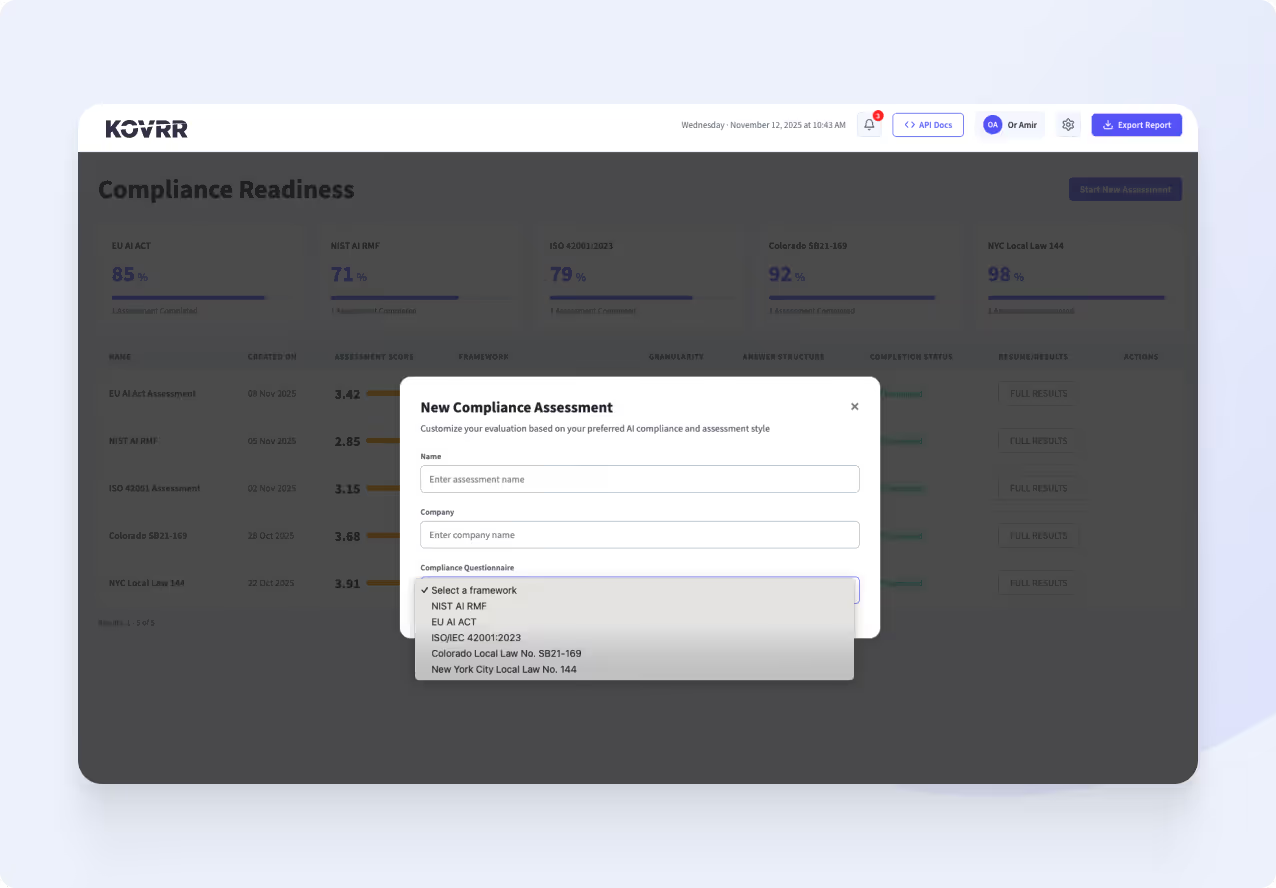
While AI tools and agents bring immense opportunities, they also introduce compliance challenges that most governance programs are still adapting to manage. With regulations and frameworks such as the EU AI Act, NIST AI RMF, and ISO 42001 expanding oversight expectations, conducting a compliance readiness assessment helps organizations evaluate alignment, benchmark safeguard maturity, and understand how current governance practices measure up against evolving requirements.
Surface the Control Gaps That Drive Exposure
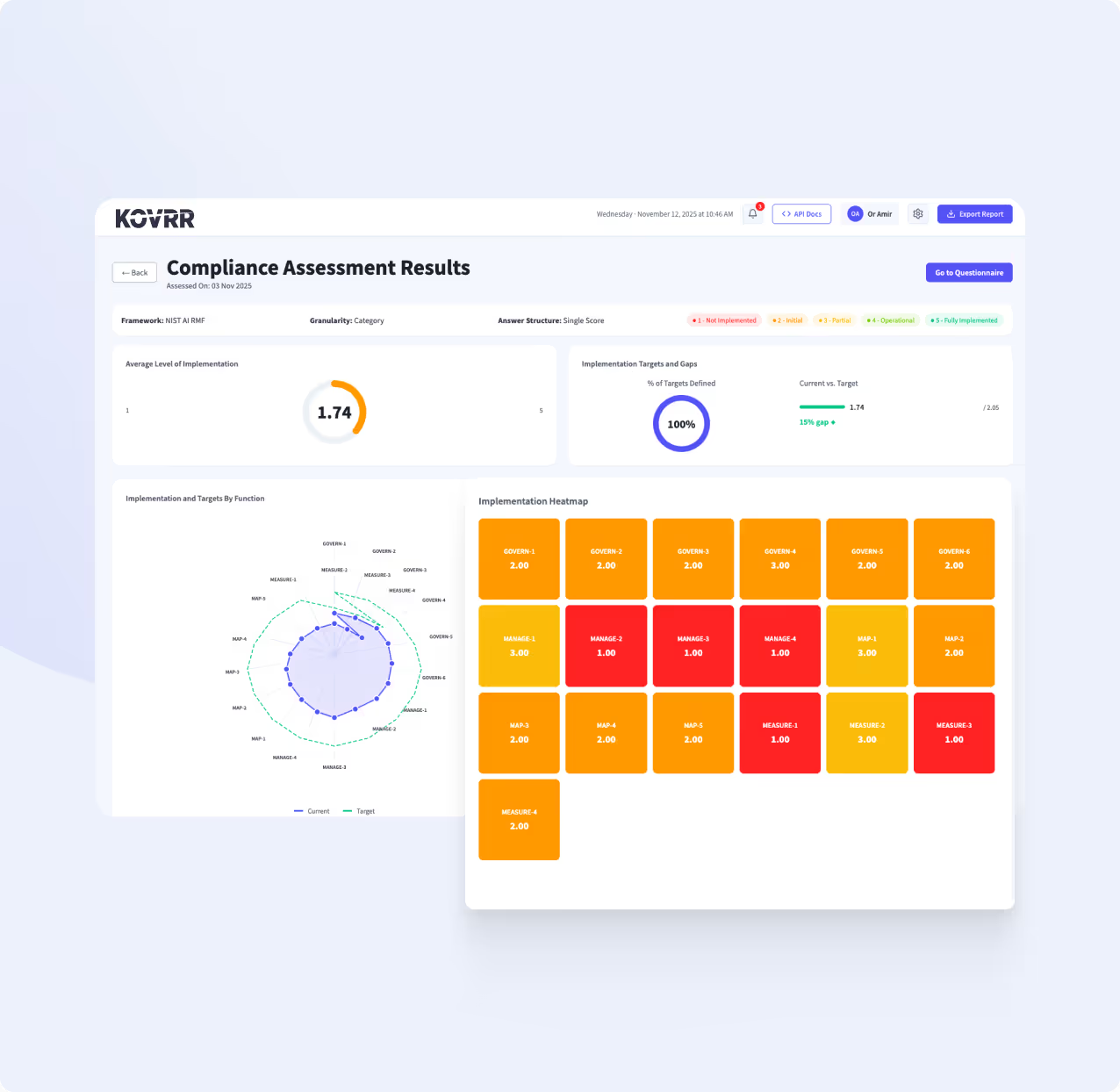
Kovrr's AI assessment tool identifies governance and safeguard gaps, giving teams structured insight to strengthen oversight, ensure alignment, and prepare for regulatory change.
Evaluate current compliance maturity across governance domains and control categories.
Identify readiness gaps that may increase operational, regulatory, or ethical exposure.
Demonstrate alignment with the EU AI Act, NIST AI RMF, ISO 42001, and other governance standards.
Inform next steps with recommendations based on governance gaps that influence modeled financial exposure.
The assessment turns compliance results into a roadmap for measurable progress, generating structured inputs that inform AI Risk Quantification (AIRQ) and defensible governance decisions.
Prioritize Remediation Efforts by Financial Impact
Kovrr’s prioritization capabilities help teams focus resources on the control upgrades that deliver the greatest measurable improvement, replacing subjectivity with quantified, evidence-based reasoning.
Rank by modeled impact: Identify which actions yield the greatest reduction in financial exposure and control maturity advancement.
Link outcomes to ROI: Connect each improvement to its projected financial and operational benefits.
Eliminate guesswork: Replace subjective prioritization with transparent, monetary, and evidence-backed reasoning.
Guide long-term strategy: Build a roadmap that evolves with maturity progress, dependency sequencing, and shifting risk conditions.
Every improvement becomes traceable and aligned with leadership objectives, turning compliance insights into financially grounded AI assurance decisions.


Build an AI Assurance Roadmap and Track Measurable Progress
Compliance readiness doesn't end at assessment. Kovrr enables teams to transform findings into a prioritized improvement roadmap, assign stakeholders across functions, and track advancement over time. The process promotes cross-functional collaboration while generating structured documentation that supports defensible reporting and demonstrates accountability as governance decisions evolve.


for AI Compliance and Assurance
Quantify the Business Impact of Governance Gaps
Kovrr’s AI Risk Quantification (AIRQ) models build on the AI compliance assessment results, translating structured governance data into quantifiable exposure and projected financial impact. The result is board-ready insight that connects governance maturity and AI assurance directly to enterprise risk posture.


AI Compliance Readiness FAQs
Assess AI Compliance ReadinessWhat is an AI compliance solution?

How does Kovrr's AI assessment tool evaluate compliance readiness?
Does Kovrr's AI compliance software cover agentic AI risks?
Can the assessment results be used for audits or regulatory reporting?
How does Kovrr determine which AI assurance improvements matter most?
How does AI compliance and assurance connect to AI Risk Quantification?
